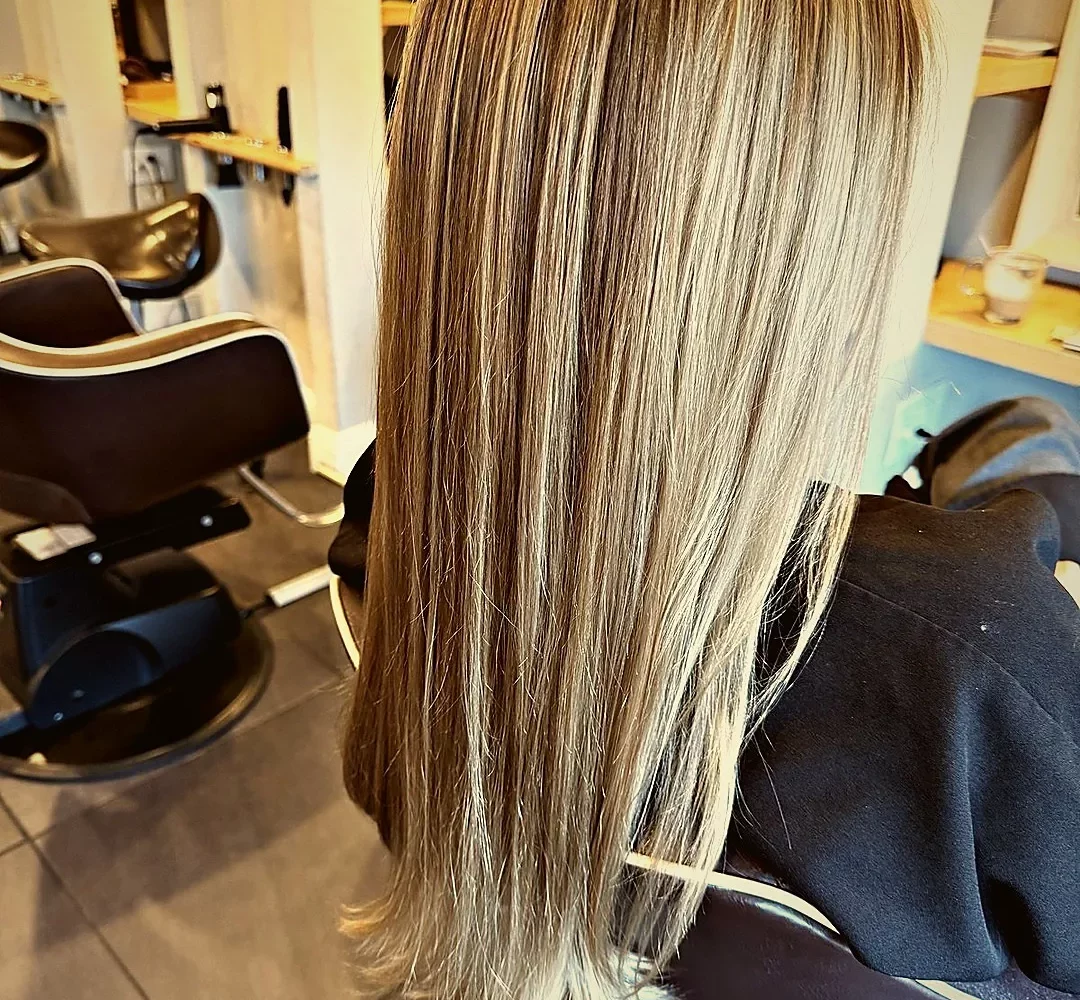
Around menopause, many women find their hair suddenly feels dry, brittle and finer than it used to. It holds moisture less well, the ends snap, and colour that used to behave starts to feel rough. Hormone changes are part of it. The good news is that how the hair feels can usually be brought back: softness by restoring its lipids, strength by restoring its protein.
What changes in the hair
Clients describe it by touch first. The signs we hear most often in the chair:
- Hair that feels dry and rough, even right after conditioner
- Ends that feel brittle and break when you brush
- Strands that feel finer, or a ponytail that feels thinner
- Less shine and less movement
- Colour that feels harsher on the hair than it used to
Why it happens
As hormones shift, hair tends to hold moisture less well and can grow in finer. On its own that is manageable. Add years of colour, lightening and daily heat, which strip the lipids that keep hair soft and the protein that gives it strength, and the dryness and breakage show up quickly.
That is why the answer is rarely one product. It is putting back what is missing and being gentler with what you do next.
What to avoid
- Harsh lightening on hair that already feels dry or stretchy
- High heat every day: lower the temperature and skip a day when you can
- Clarifying or very strong shampoos
- Brushing hard while the hair is wet

How we help menopause hair at Tomy B. Salon
- Lipid treatment for hair that feels dry, stiff or rough. It restores the lipid barrier, so hair feels soft again and reflects light.
- Collagen treatment for hair that snaps. It is a separate treatment that puts protein and elasticity back, so hair bends instead of breaking.
- Gentler colour. Our highlights are done without bleach, with high-lift colour, and Tomy’s own colour line is made in Italy.
- A precision cut to take off the brittle ends, so the hair looks fuller and moves again.
Every plan starts with a look at your hair and a conversation about how it feels now and how you want it to feel.
At home between visits
Wash with a gentle shampoo and warm, not hot, water. Use a lipid treatment once a month to keep the softness, and a few drops of serum on the ends as needed.
When to see a doctor
If you notice sudden shedding, patches or a widening part, see your doctor first. A salon can help how your hair feels and looks; it cannot treat medical hair loss. Our hair shedding guide explains what to look for.
Book a visit: book online or call (516) 621-4100. Tomy B. Salon, Williston Park, Long Island.
Related: Can over-processed hair be repaired? · How to combat dry hair · Collagen hair treatment · Hair changes on GLP-1 medications